At Interpack 2026, the packaging industry faces an inescapable reality: compromise is no longer enough. Decision-makers worldwide must solve a complex equation in which operational performance must be fully aligned with environmental requirements that are becoming ever stricter.
Amid all this buzz, one Italian company is putting forward an innovative vision: Universal Pack. Speaking through Nicolo Joanini, Key Account and Sales Area Manager, the company asserts that tomorrow's solutions are no longer an option but a strategic necessity. What makes this position particularly powerful is that it rests on a complete reversal of the prevailing ecological logic.
Single-dose packaging: scapegoat or unsung hero in the fight against waste?
The case against single-dose packaging
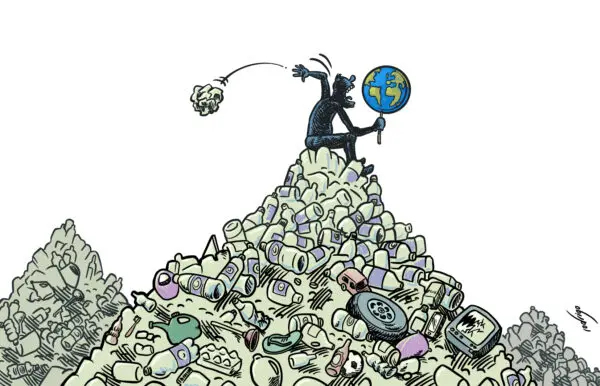
When we think of the environmental crisis, the image that springs to mind is this: billions of small individual packs piling up in landfills around the world.
These items have become the symbol of waste.
Our sense of guilt points the finger at single-dose packs as the culprits. And this is precisely where the mistake begins.
It rests on seemingly irrefutable logic: more packaging means more waste, and therefore more environmental damage. Yet, as Nicolo Joanini points out, this simplistic correlation does not reflect the real complexity of the problem. The idea seems obvious on paper, but reality proves far more nuanced once we look at it closely.
Single-serve coffee sachets, wrapped sugar portions, cream samples...
The real problem: food waste
What is the biggest environmental problem linked to food?
The real enemy of the environment is not packaging itself. It is food waste. And that is a crucial difference.
Producing a unit of food requires water (sometimes thousands of litres), energy (fertilisers, machinery, transport), precious farmland and international transport. When that finished product ends up in the bin, all those production inputs are lost.
Environmental data confirm this unambiguously: food waste is responsible for a significant share of global CO2 emissions.
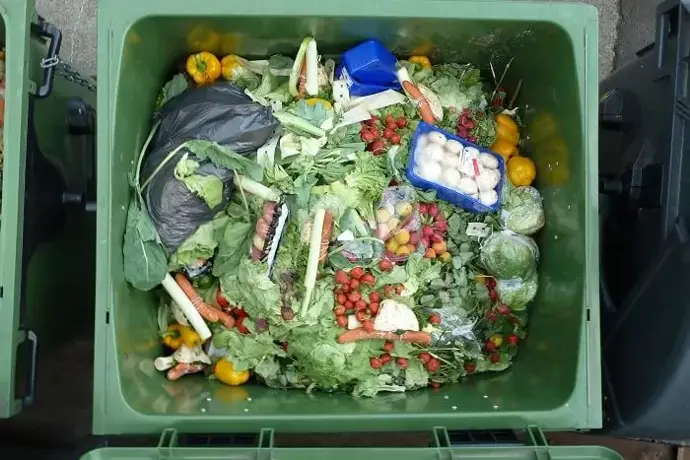
The carbon impact of food waste often exceeds that of commercial air transport.
Single-dose packaging as a solution
Preserves product freshness
Maintains impeccable hygiene conditions
Significantly extends shelf life
Ensures that exactly the right portion is consumed. Zero food waste.
Single-dose packaging as a solution
That is when Universal Pack asks the question that will shake the certainties of an entire industry: "what if single-dose packaging were not the enemy, but the precisely calibrated solution to combat this massive waste?"
Single-dose packaging directly counters the problem of food waste.
It is a radical shift in perspective that forces us to rethink the environmental equation itself.
The strategic triad: three inseparable pillars
Universal Pack has identified a fundamental truth that goes beyond simple machine optimisation: packaging machines must integrate three elements to meet tomorrow's complex challenges.
1 Sustainability
Sustainability does not simply mean replacing plastic with paper or adding a green label to the product. This reductive view is precisely what has discredited the term "greenwashing" among consumers.
Sustainability means reducing the overall environmental impact of the finished product, from the very first moment of its design to its final incineration.
This means:
- Meticulously optimising every gram of material used
- Reducing packaging weight without compromising its essential protective function
- Ensuring that when the packaging is finally discarded, it breaks down in a responsible and predictable way.
It is a balance that demands an understanding of every variable in the process: the thermal properties of materials, oxidation kinetics, gas permeability, heat-sealability. Good sustainable design is never the result of chance. It is the fruit of careful thought and constant innovation.
2 Industrial efficiency
A packaging machine has to work. It must package products at high speed without defects, with a precision that holds day after day, without interruption. It must minimise unexpected stoppages, reduce production waste and maximise output with high reliability.
It sounds trivial, but this is precisely where many green initiatives fail: they sacrifice operational performance in the name of environmental virtue.
3 Adaptive flexibility
Regulations change. The PPWR is arriving with its requirements. Consumer expectations evolve from year to year. Global supply chains are reorganising in response to unpredictable geopolitical crises. Innovative materials are coming onto the market and replacing yesterday's.
In this context of permanent uncertainty, a packaging machine must be able to pivot, adapt and accommodate new materials and new requirements without being completely redesigned. That is flexibility: the ability to evolve without losing its essence.
Co-designing the future with the value chain
Sustainability cannot be a "default" feature added at the end of the process. It results from a rigorous collaborative methodology that the company applies to every project.
This approach is built around several strategic areas:
Material optimisation
Joint R&D work with suppliers to select the most sustainable substrates without compromising product integrity.
Strategic design
Packaging engineering designed to minimise material while maximising protection.
Industrial performance
An assurance that sustainable innovation fits seamlessly into high-efficiency production flows.
Active collaboration
Ongoing dialogue between the customer and the technology partner to adapt solutions to the specific realities of the market.
The sensitivity of innovative materials
Here is a detail that grandiloquent articles on sustainability often leave out: new sustainable materials are sensitive. Their thermal properties are very different from those of conventional plastics. They behave differently during heat sealing. They require entirely new machine kinematics.
The major challenge for manufacturers today lies precisely in handling these delicate, demanding materials. Maintaining, or even exceeding, current performance levels with these new substrates requires cutting-edge technical expertise that no company can improvise.
SEALESTER
At Sealester, we offer a range of single-dose formats that could suit your needs:
- Doypack
- Side gusset pouches
- Three-side seal pouches
In a range of recyclable materials:
- PE (polyethylene)
- PCR (recycled and recyclable plastic)
- Apple paper
With or without accessories, which are also recyclable