The flexible pouch is now one of the most widespread packaging formats in industry. Food, cosmetics, home care, pet food, technical products: it is everywhere, for a simple reason. It combines ecological and practical benefits (lighter transport, refill use, recyclability, low weight), effective product preservation and strong on-shelf differentiation.
But between the production of the empty pouch by a converter such as SEALESTER and the finished product on a retailer's shelf, there is a key step that is often overlooked: PACKING. In other words, all the industrial operations involved in filling the pouch, closing it, inspecting it and preparing it for shipment.
This guide aims to explain from A to Z what packing a flexible pouch involves, how it works, which machines are used, which types of products can be packed, and which questions to ask before launching a production line.
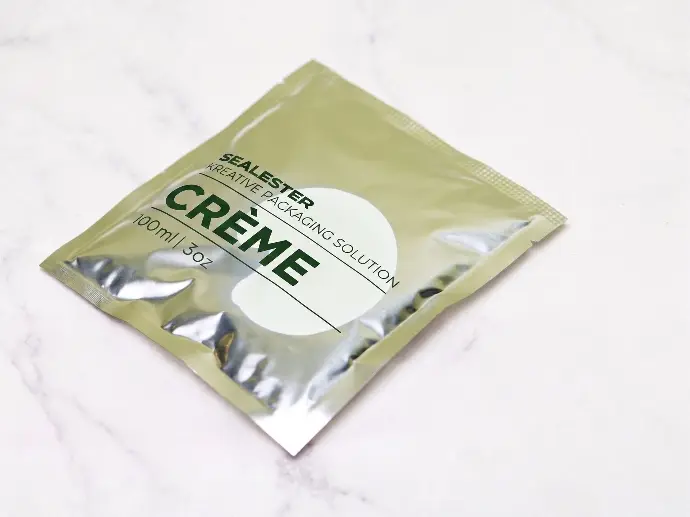
The three-side seal pouch
Also known as a flat pouch or 3-side pouch, it consists of two panels heat-sealed on three sides. It does not stand up on its own but is very well suited to powders, single portions, tea sachets and dry food products.
Flexible pouch formats: what are we talking about?
Before looking at packing, it is important to distinguish between the different flexible pouch formats available on the market, as each one involves different filling constraints.
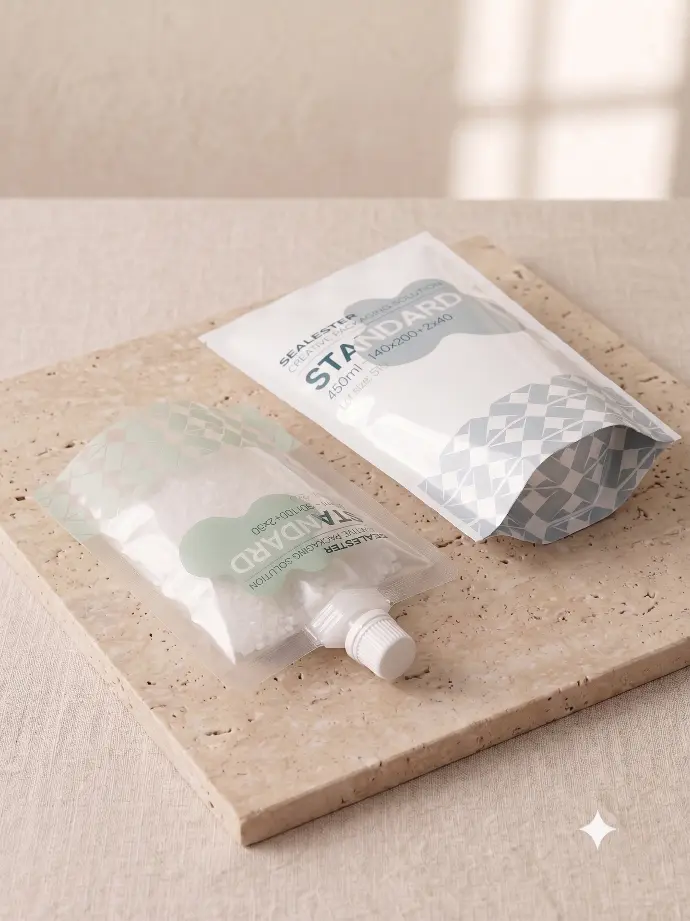
The doypack (stand-up pouch)
This is the best-known format. It has a gusseted base that allows it to stand upright on shelves, whether full or partly empty. It can be fitted with a resealable zip, a dosing cap or a pouring spout.
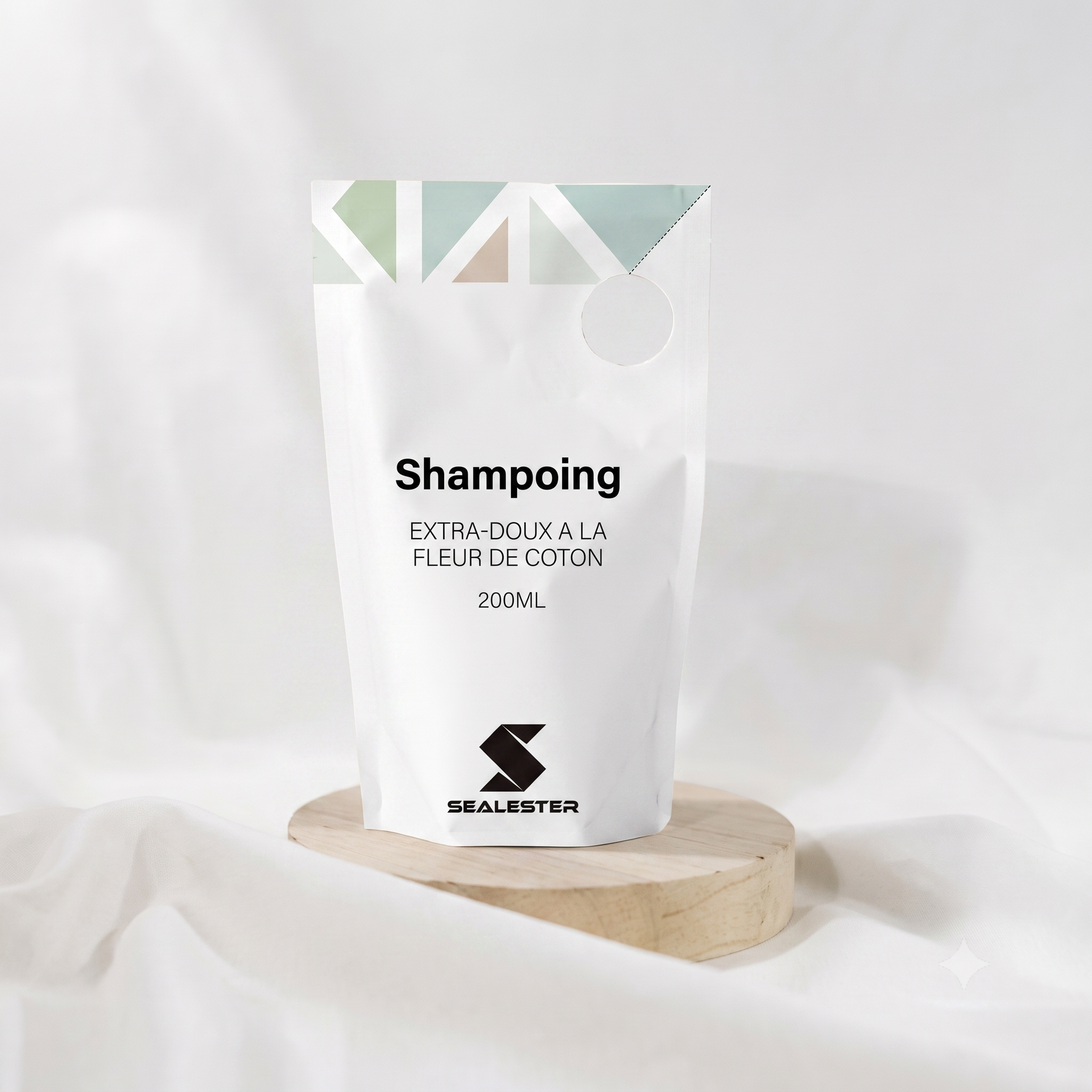
The single-dose sachet
A format without a cap, designed for single use.
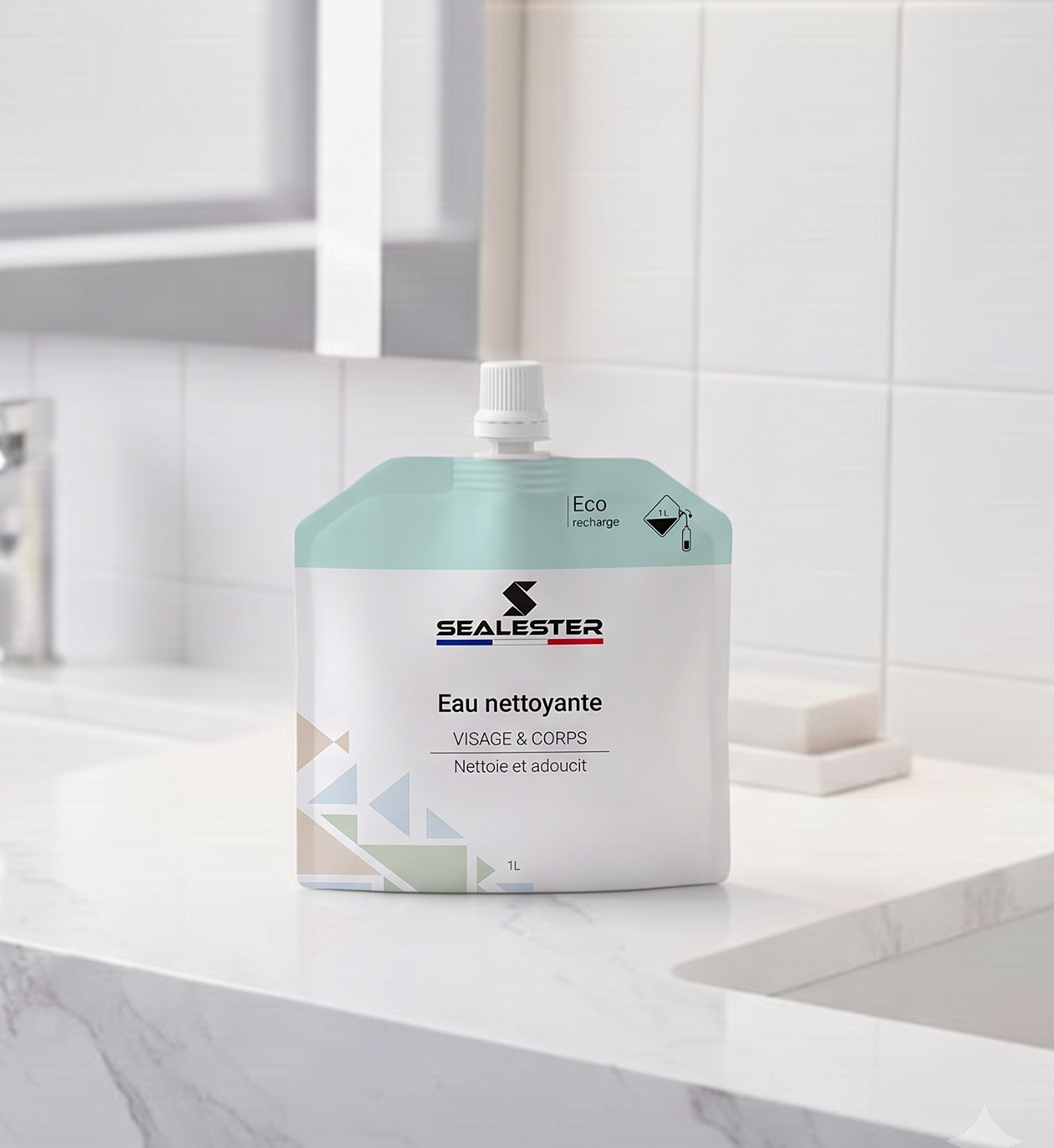
The side-gusseted pouch
It has folds on both sides that open out when filled, increasing its usable volume.
The two methods of filling flexible pouches
This is the key question every manufacturer needs to ask before choosing a packing line. There are two fundamentally different approaches.
Filling through the pouch opening (top filling)
This is the most common method for standard doypacks. The pouch is preformed and delivered empty by the manufacturer (this is known as a preformed or premade pouch). It is loaded into the packing machine, opened at the top, filled with the product and then heat-sealed at the top to close the pack permanently.
Advantages:
- Compatible with a very wide range of products (liquids, powders, granules, moist products, solids)
- Allows complex features (zip, tear notch) to be built directly into the pouch during manufacturing
- Line flexibility: fast format changeovers
- Optimal visual quality: the pouch is already printed and formed before filling
Disadvantages:
- Requires a sufficiently wide opening at the top of the pouch for filling
- The zip must be held open mechanically during filling
- Less suitable for very pasty or viscous products with a high modulus of elasticity
Typical products: Coffee, spices, dried fruit and nuts, kibble, food supplements in powder or capsule form, granules, cosmetic powders, confectionery, condiments.
Bring your project to life
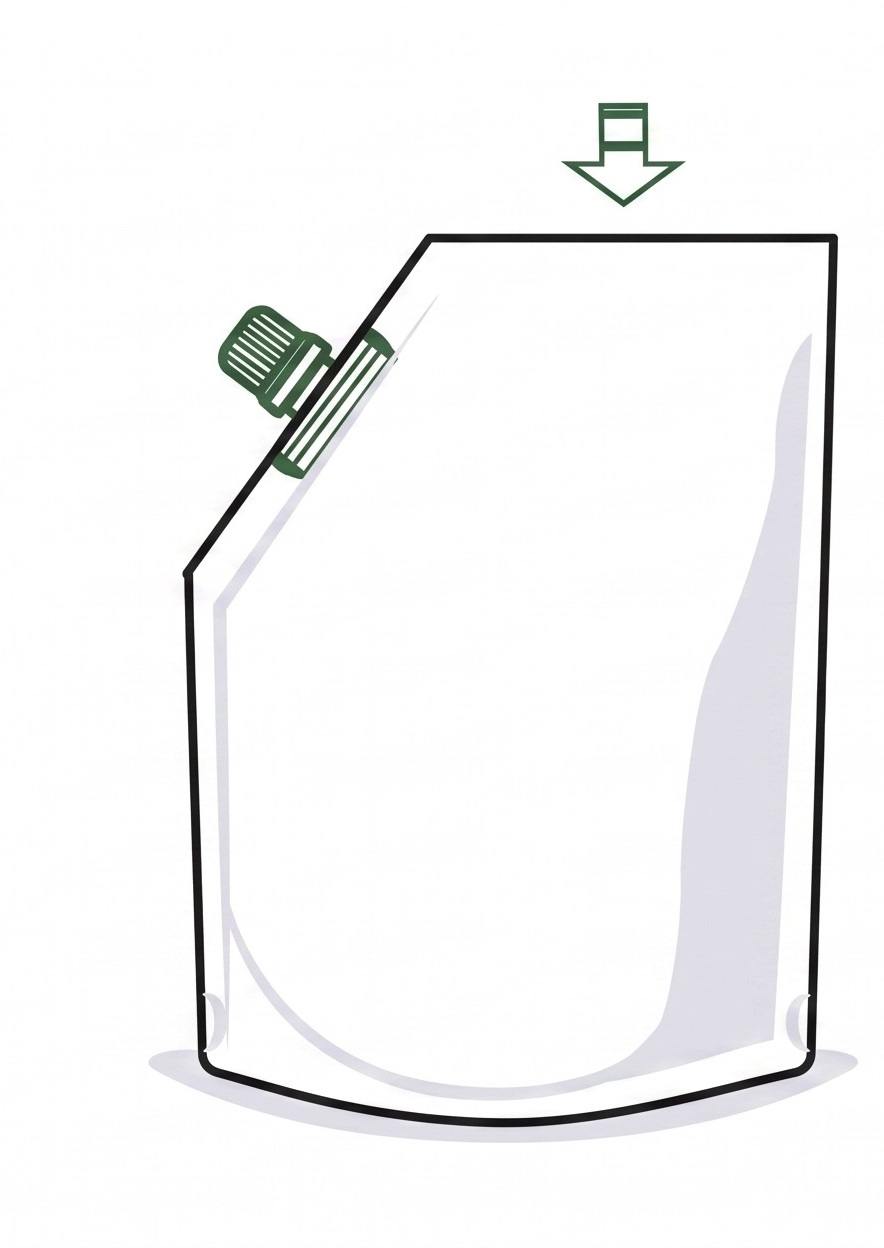
Bottom filling
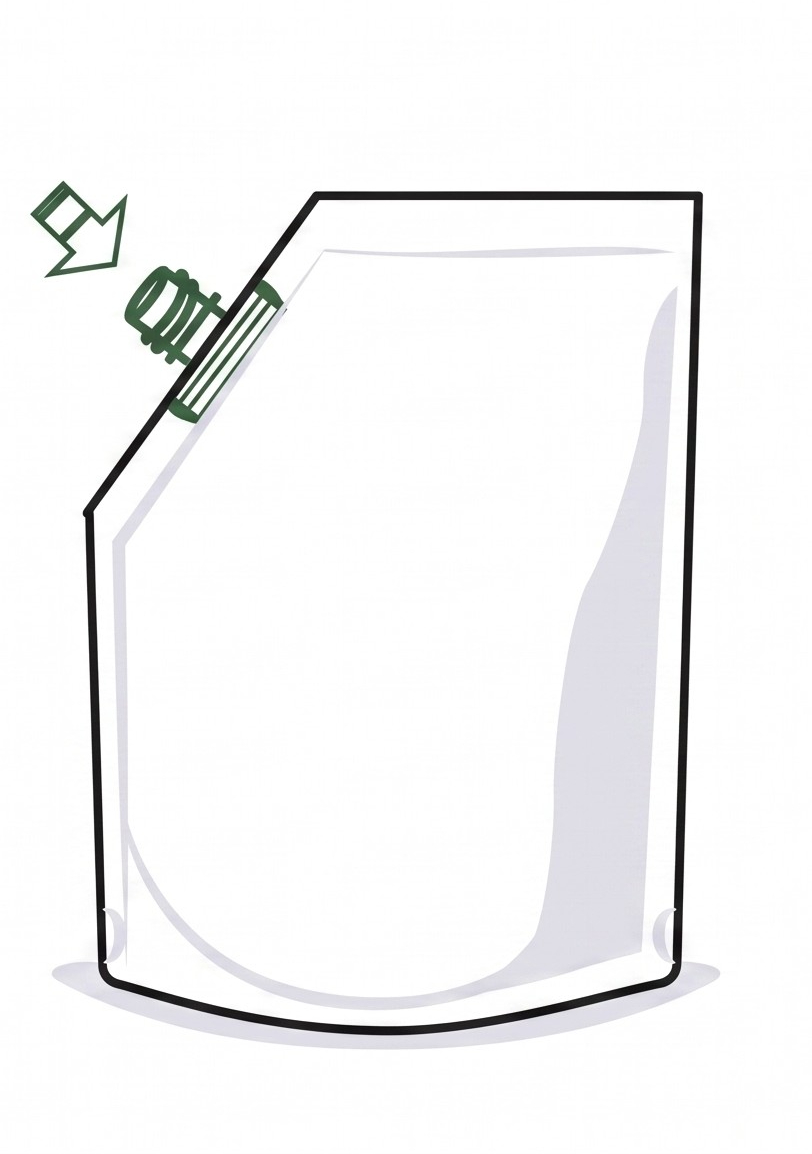
In this case, the pouch is filled before its bottom or base is sealed. The machine injects the product through the bottom of the pouch, then heat-seals the lower part. This is also the method used for pouches with a cap (inverted pouch): the cap is fitted at the bottom during manufacturing, the pouch is filled through the upper base, and this base is then sealed.
Advantages:
- Ideal for liquid and viscous products
- Excellent tightness thanks to the seal made after filling
- Makes it possible to pack air-sensitive products under a protective atmosphere
- The inverted pouch with cap is very practical for products that need dosing (laundry detergent, shower gel)
Disadvantages:
- Pouch manufacturing is more complex (cap or base integrated before filling)
- More specialised and often more expensive packing lines
- Less flexible for format changeovers
Typical products: liquid laundry detergent, shower gel refills, liquid sauces, juices, dairy products, cosmetic creams, oils, detergents.
The technical specifics of sealing and heat sealing
Sealing is the most critical operation in packing. A defective seal compromises product preservation and can lead to batch recalls.
Key heat sealing parameters
Temperature: this varies according to the film material. PE (polyethylene) films generally seal between 120°C and 160°C. PP (polypropylene) films require slightly higher temperatures. Composite films (kraft + PE) require different parameters for each layer.
- Pressure: the sealing jaws apply controlled pressure to the film to ensure the layers fuse evenly. Insufficient pressure leaves micro-channels, while excessive pressure can cause thinning in the seal.
- Dwell time: the length of time the jaws remain in contact with the film. The thicker or more complex the film, the longer this time needs to be. It is a balance to be struck between seal quality and production speed.
- Seal width: generally between 5 and 15 mm depending on the application. A wider seal offers a larger bonding surface but reduces the usable height of the pouch.
Contamination of the seal area
This is the main cause of seal failure. If traces of product (liquid, grease, powder) are deposited on the edges of the pouch before sealing, the heat bond will be compromised. Anti-contamination systems include diving filling nozzles, compressed-air blowers to clean the seal area, and optical detection systems before the pouch enters the sealing station.
Quality control in packing
Quality is not only checked at the end of the line. It is managed at every stage.
Leak tests
- Compression test: the filled pouch is squeezed mechanically. Any leak is detected by a pressure sensor or visually. Fast and non-destructive.
- Vacuum immersion test: the pouch is immersed in a water bath and subjected to a vacuum. Bubbles indicate a leak. More accurate but destructive for the unit tested.
- Tracer gas test: a tracer gas (CO₂ or helium) is introduced into the pouch and a sensor detects any external leak. Very accurate, used for high value-added products.
Weight control
A checkweigher verifies the weight of each pouch after filling and sealing. Out-of-tolerance units (too light or too heavy) are automatically rejected.
Visual inspection by machine vision
High-resolution cameras inspect every pouch as it leaves the line: seal check (coverage, no creases), barcode or QR code reading, expiry date verification, and checking the presence and position of the zip or cap.
Drop resistance testing
Standardised tests (free fall from a set height, onto different faces) are used to validate the mechanical strength of the pouch and seal as a whole. This is a qualification test carried out on samples at the start of a production run, not on every unit.
Integrating the pouch into the complete value chain
Packing the pouch is just one step in a longer chain.
Supply of empty pouches
Sealester ships the preformed pouches in cartons, packed back-to-back or nested. They must be stored in a clean environment, at controlled temperature and humidity, away from UV light to prevent any deterioration of the film or print before use.
Traceability
Each batch of empty pouches is referenced with a production batch number and a material code.
Logistics and storage
Flexible pouches offer a major logistical advantage: their light weight and small footprint when empty significantly reduce transport costs and storage space. Once filled, they stack efficiently in cartons, and their stability (thanks to the doypack's gusseted base) makes handling and shelf display easier.
Conclusion
Packing flexible pouches is a technical discipline that draws on expertise in mechanical engineering, materials chemistry, automation and industrial quality.
Well chosen and properly configured, it delivers packaging that is efficient, distinctive and compliant with growing regulatory requirements (PPWR, AGEC, recyclability). Poorly planned, it leads to production losses, sealing problems, customer returns and regulatory non-compliance.
At SEALESTER, we support our customers right from the pouch design stage to make sure that the chosen format, materials and features are fully compatible with their existing or future filling line. From prototyping to industrial production, our design office is on hand to qualify every new project.